Hapalopus bolivar (Bolivia Pumpkin Patch)
Hapalopus sp. “Bolivar” (Bolivar Pumpkin Patch Tarantula)
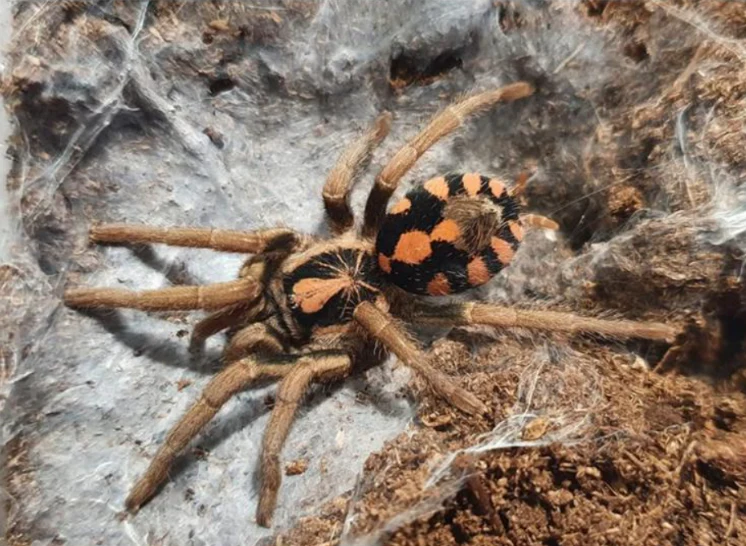
Hapalopus sp. “Bolivar” is a striking dwarf species known for its crisp, high-contrast black and orange patterning. The abdomen shows a clean, bold orange design over a deep black base, with sharper edges and a more refined look compared to similar species. The legs carry warmer orange tones overall, contrasted by darker femurs, while the carapace (head) displays noticeable radiating striping that adds to its detailed appearance. Adults remain small at around 2–3 inches, but their coloration and constant movement give them a strong visual presence. Slings already show this contrast early on, developing directly into their adult look without a dull phase.
Why do hobbyists keep Hapalopus sp. “Bolivar”?
- Early coloration: Slings show bold black and orange patterning right away, with no long dull stage
- Active and visible: Frequently out moving across webbing when humidity is dialed in
- Heavy webbing behavior: Builds dense, layered web mats that often cover the entire enclosure
- High-contrast appearance: Clean, bright orange against deep black gives it a very defined look
Care Overview?
- Enclosure: Terrestrial setup, footprint about 3× leg span and height about 2×, with substrate depth around leg span to support webbing and light burrowing
- Temperature: 65–75°F
- Humidity: Moderate to higher humidity, slightly moist substrate encourages more visible activity and webbing
- Diet: Small feeder insects like roach nymphs or crickets, sized to the carapace (head)
- Temperament: Very fast and skittish, prone to quick bursts of movement
Additional Notes or Considerations?
There is a strong possibility that Hapalopus sp. “Bolivar” is the same animal that circulated in the hobby years ago as the “fire patch,” though this remains unconfirmed. Subtle traits like the cleaner abdominal pattern, brighter orange tones, and increased carapace striping support this idea, but confirmation will require formal comparison and publication. Grab this amazing New World Tarantula for sale today!
Original: $75.00
-65%$75.00
$26.25Product Information
Product Information
Shipping & Returns
Shipping & Returns
Description
Hapalopus sp. “Bolivar” (Bolivar Pumpkin Patch Tarantula)
Hapalopus sp. “Bolivar” is a striking dwarf species known for its crisp, high-contrast black and orange patterning. The abdomen shows a clean, bold orange design over a deep black base, with sharper edges and a more refined look compared to similar species. The legs carry warmer orange tones overall, contrasted by darker femurs, while the carapace (head) displays noticeable radiating striping that adds to its detailed appearance. Adults remain small at around 2–3 inches, but their coloration and constant movement give them a strong visual presence. Slings already show this contrast early on, developing directly into their adult look without a dull phase.
Why do hobbyists keep Hapalopus sp. “Bolivar”?
- Early coloration: Slings show bold black and orange patterning right away, with no long dull stage
- Active and visible: Frequently out moving across webbing when humidity is dialed in
- Heavy webbing behavior: Builds dense, layered web mats that often cover the entire enclosure
- High-contrast appearance: Clean, bright orange against deep black gives it a very defined look
Care Overview?
- Enclosure: Terrestrial setup, footprint about 3× leg span and height about 2×, with substrate depth around leg span to support webbing and light burrowing
- Temperature: 65–75°F
- Humidity: Moderate to higher humidity, slightly moist substrate encourages more visible activity and webbing
- Diet: Small feeder insects like roach nymphs or crickets, sized to the carapace (head)
- Temperament: Very fast and skittish, prone to quick bursts of movement
Additional Notes or Considerations?
There is a strong possibility that Hapalopus sp. “Bolivar” is the same animal that circulated in the hobby years ago as the “fire patch,” though this remains unconfirmed. Subtle traits like the cleaner abdominal pattern, brighter orange tones, and increased carapace striping support this idea, but confirmation will require formal comparison and publication. Grab this amazing New World Tarantula for sale today!