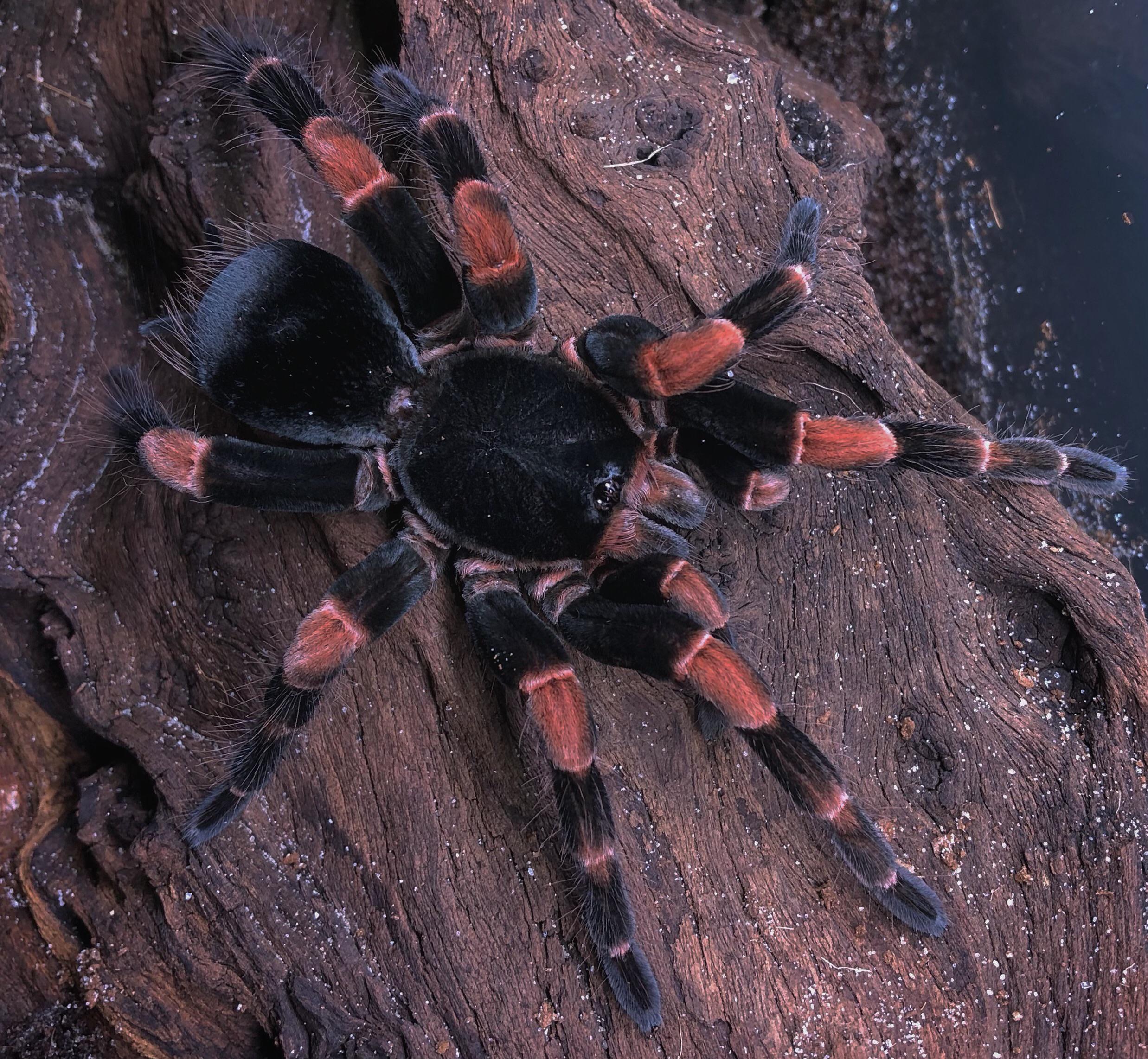
Abdomegaphobema (ex Megaphobema) mesomelas (Costa Rican Red Leg Tarantula) FEMALE
Abdomegaphobema mesomelas (Costa Rican Red Leg Tarantula)
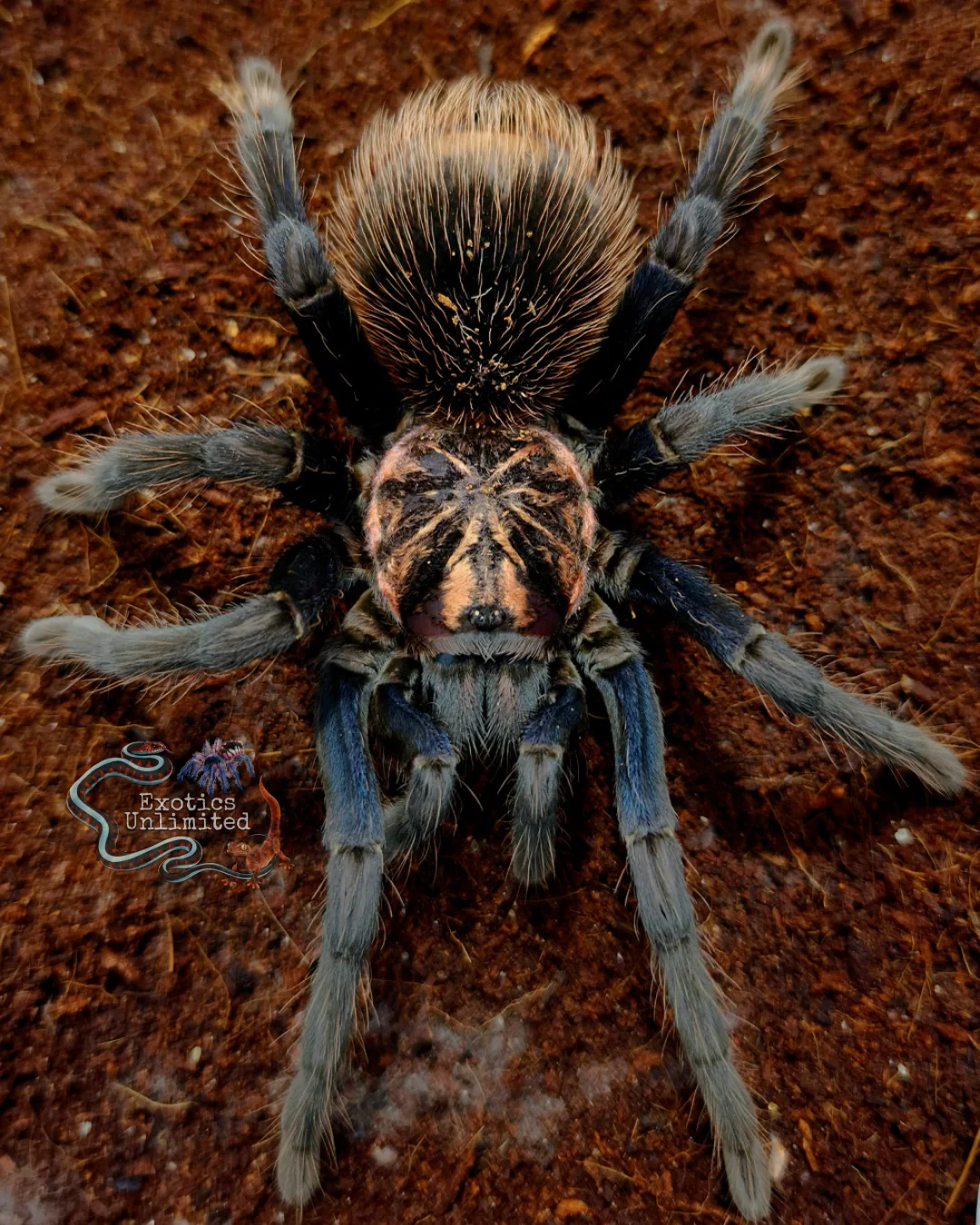
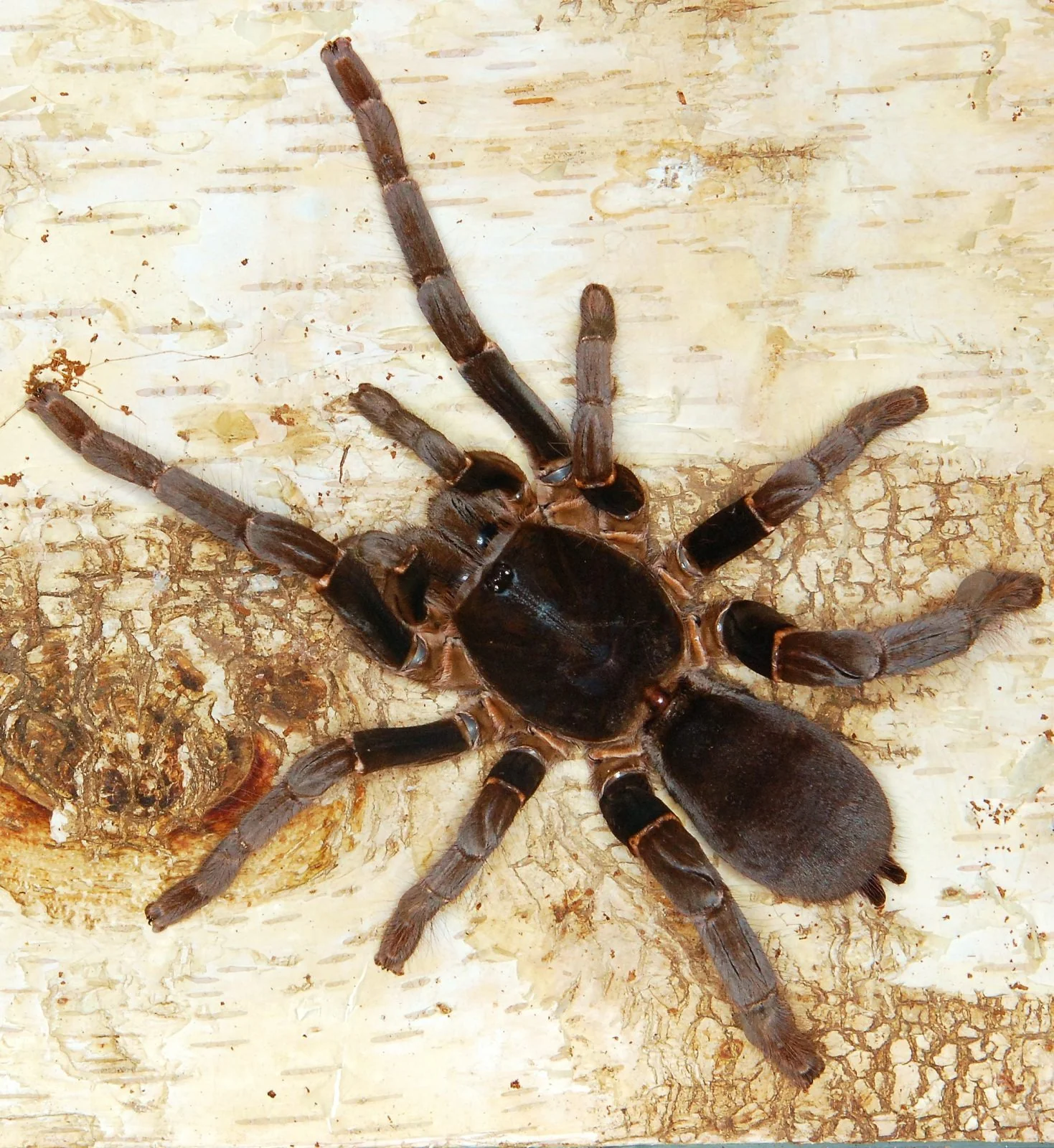
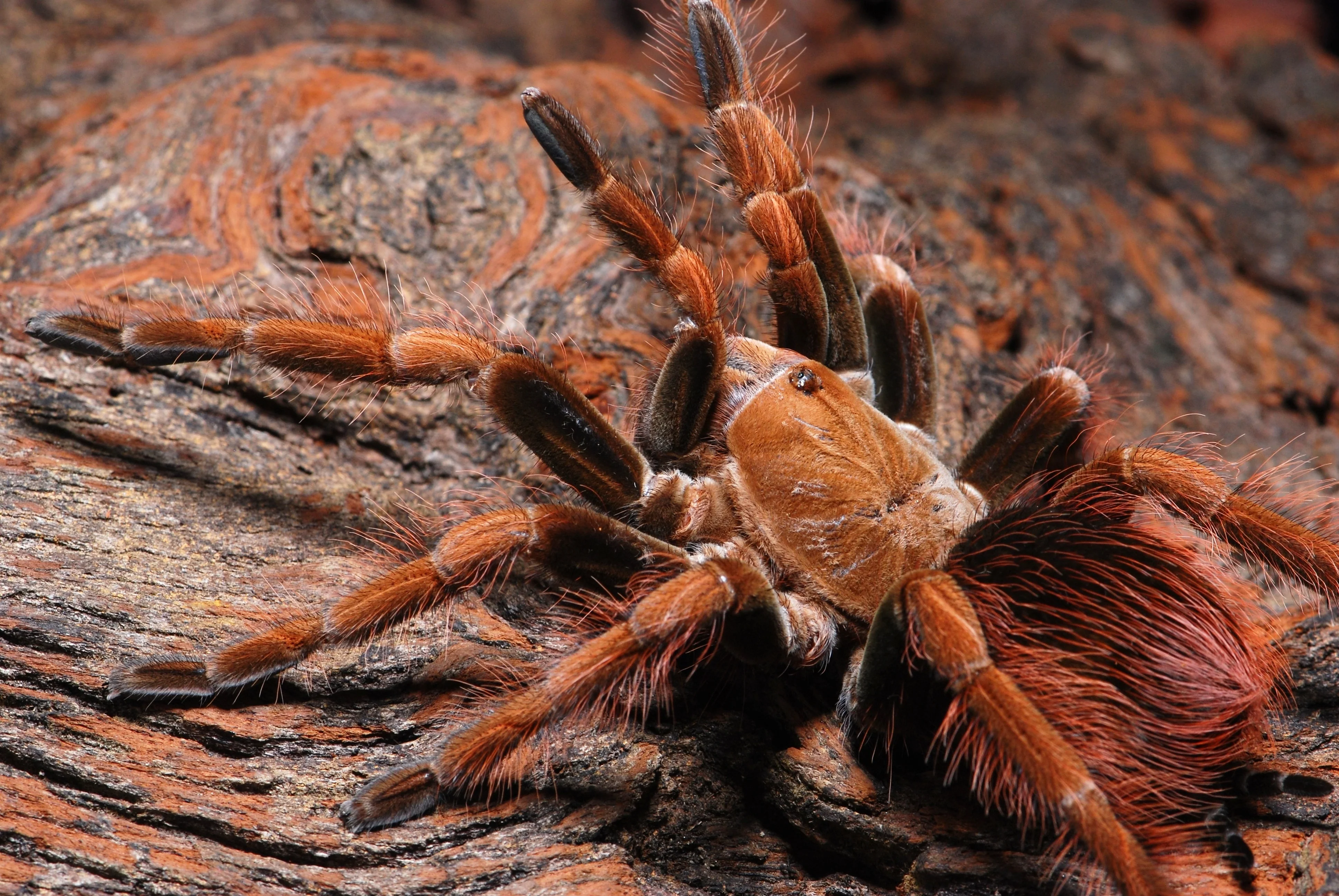
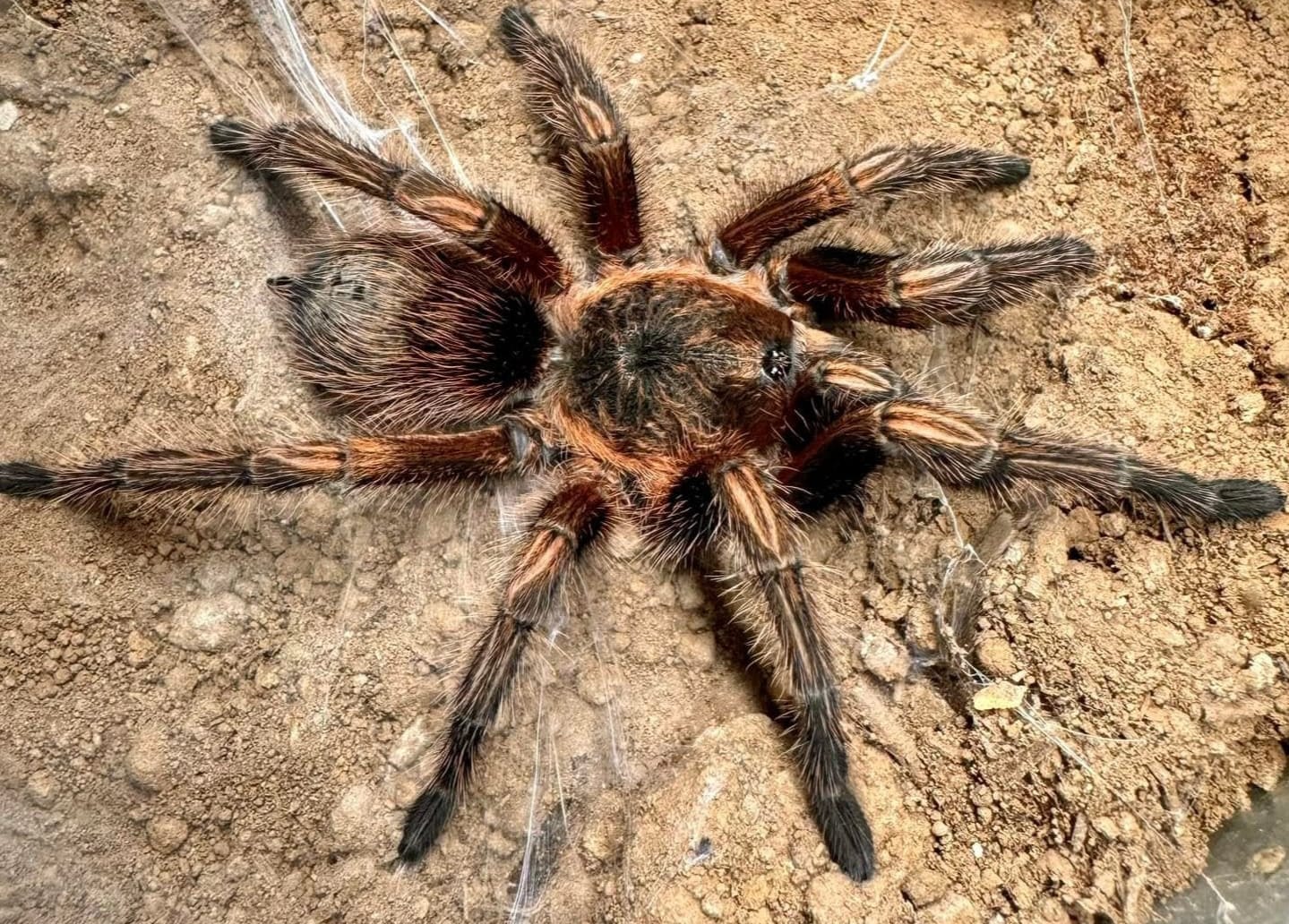
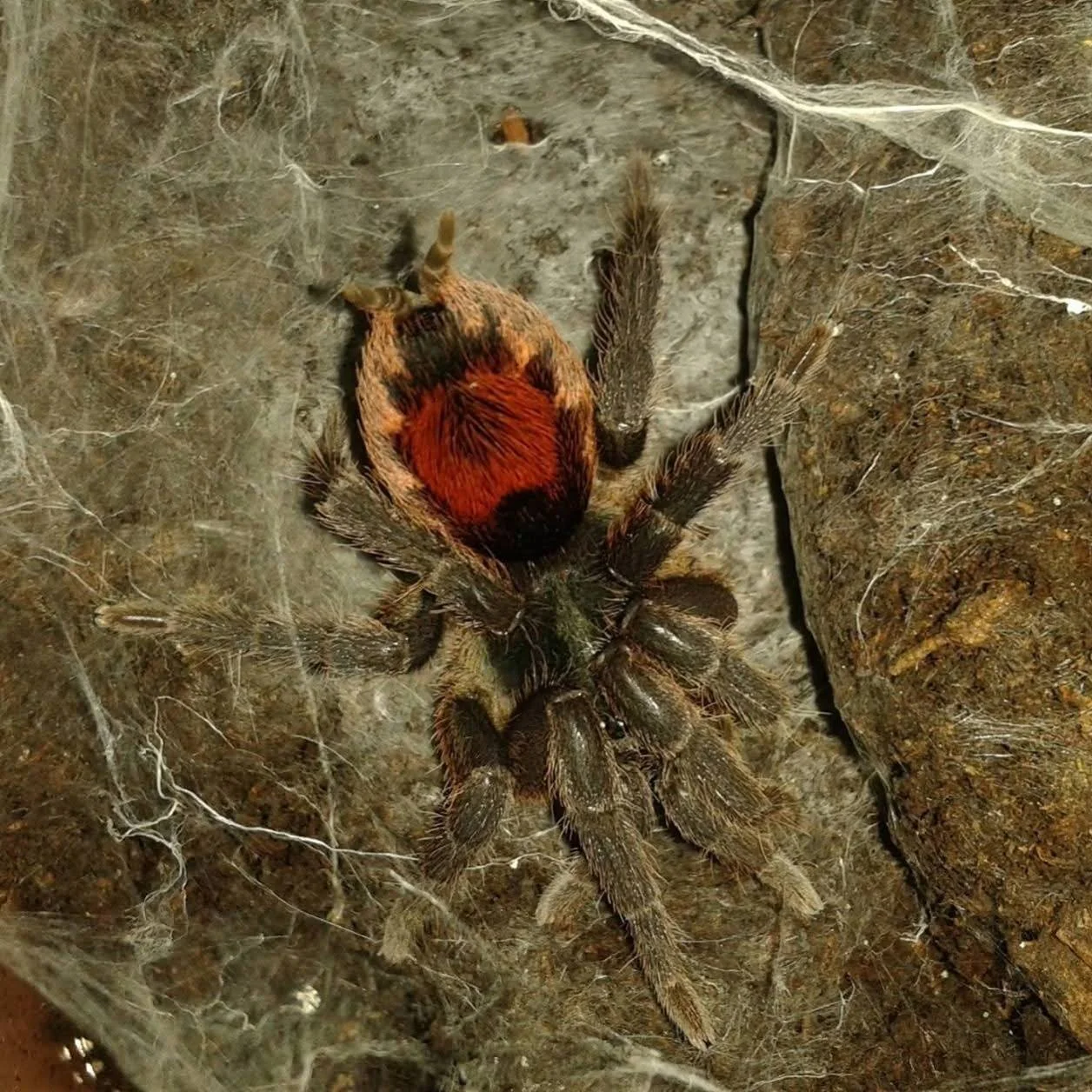
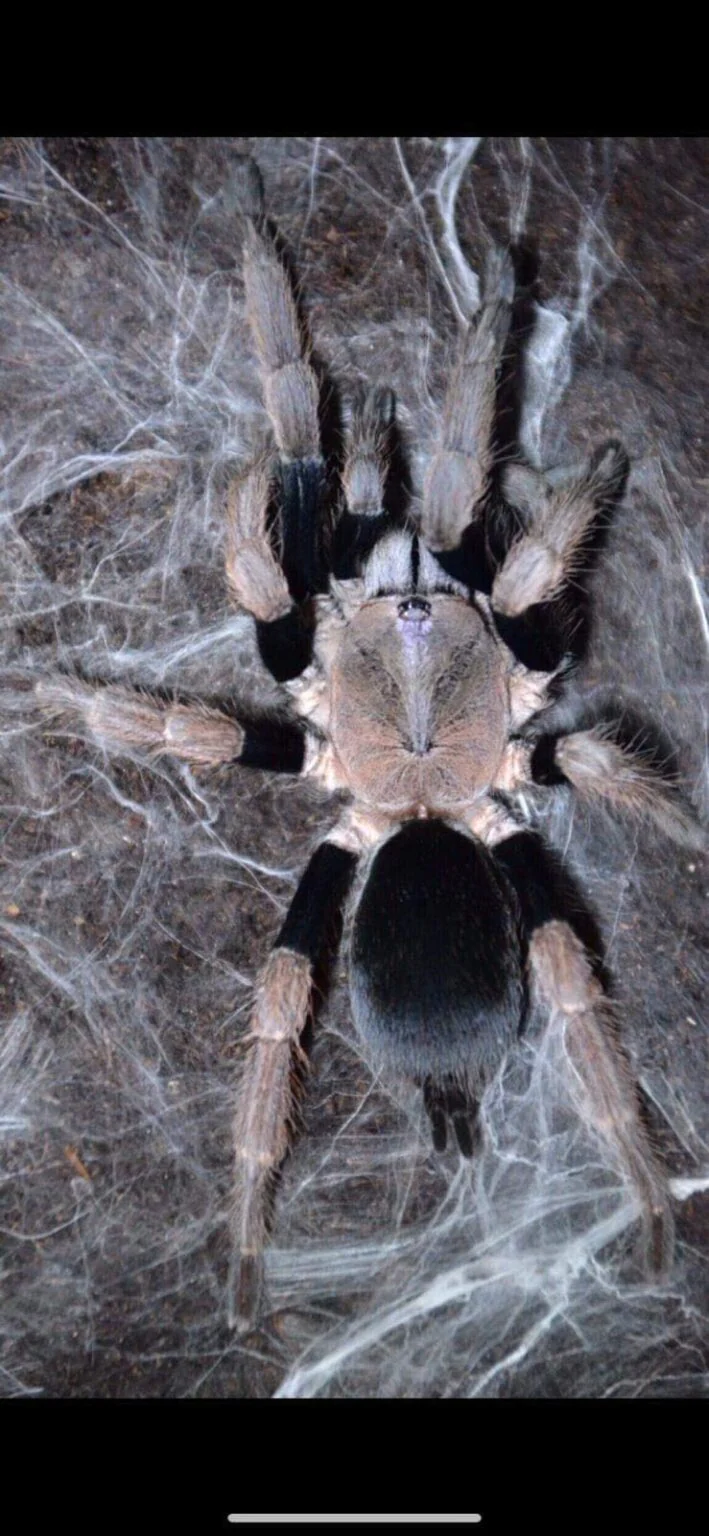
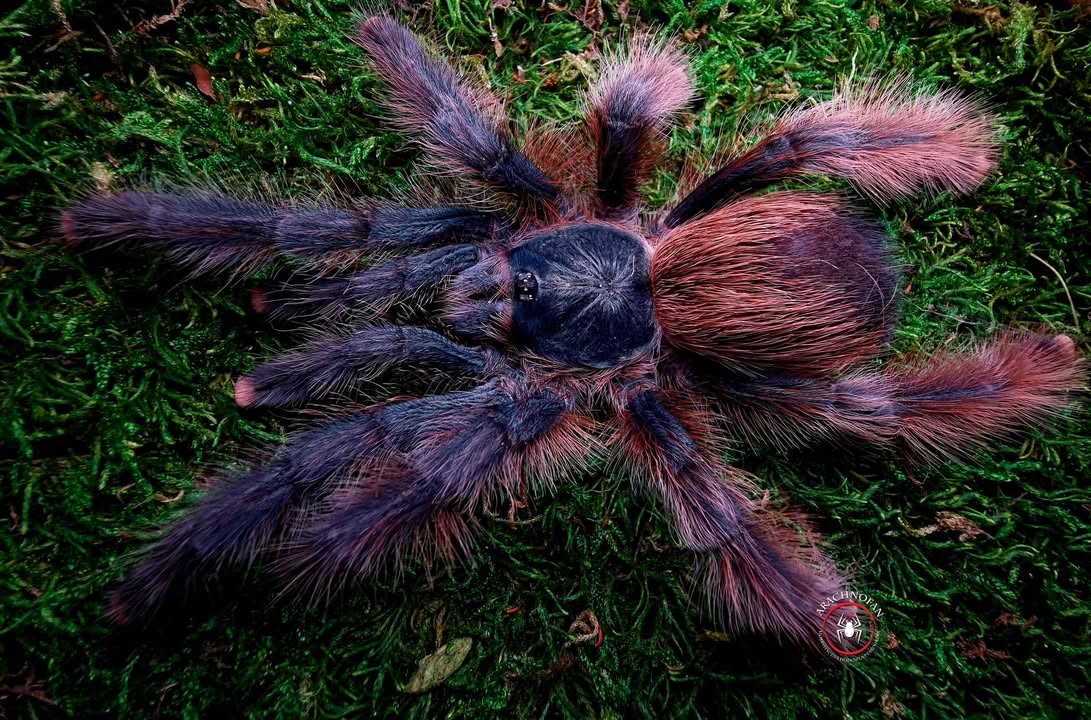
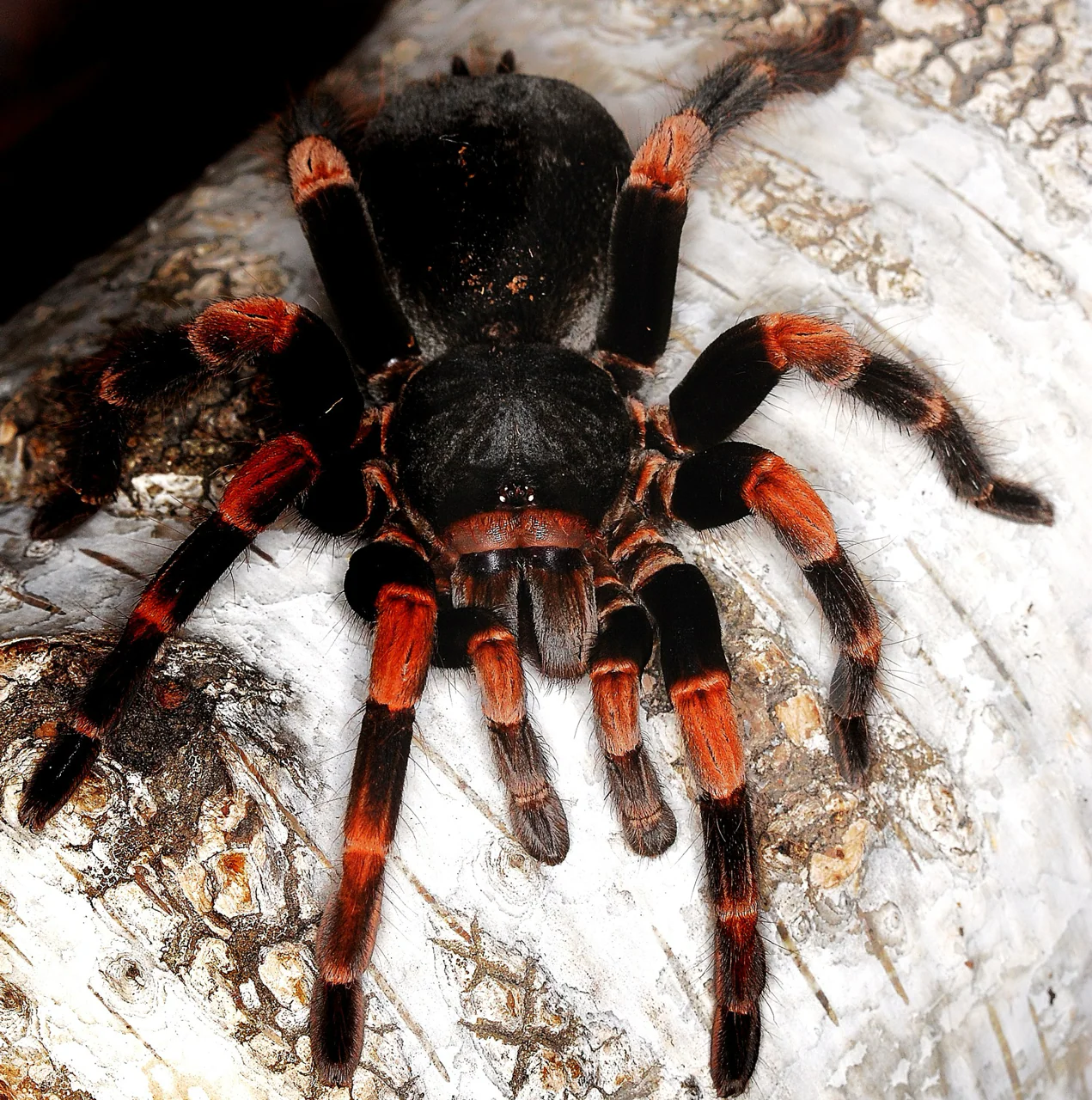
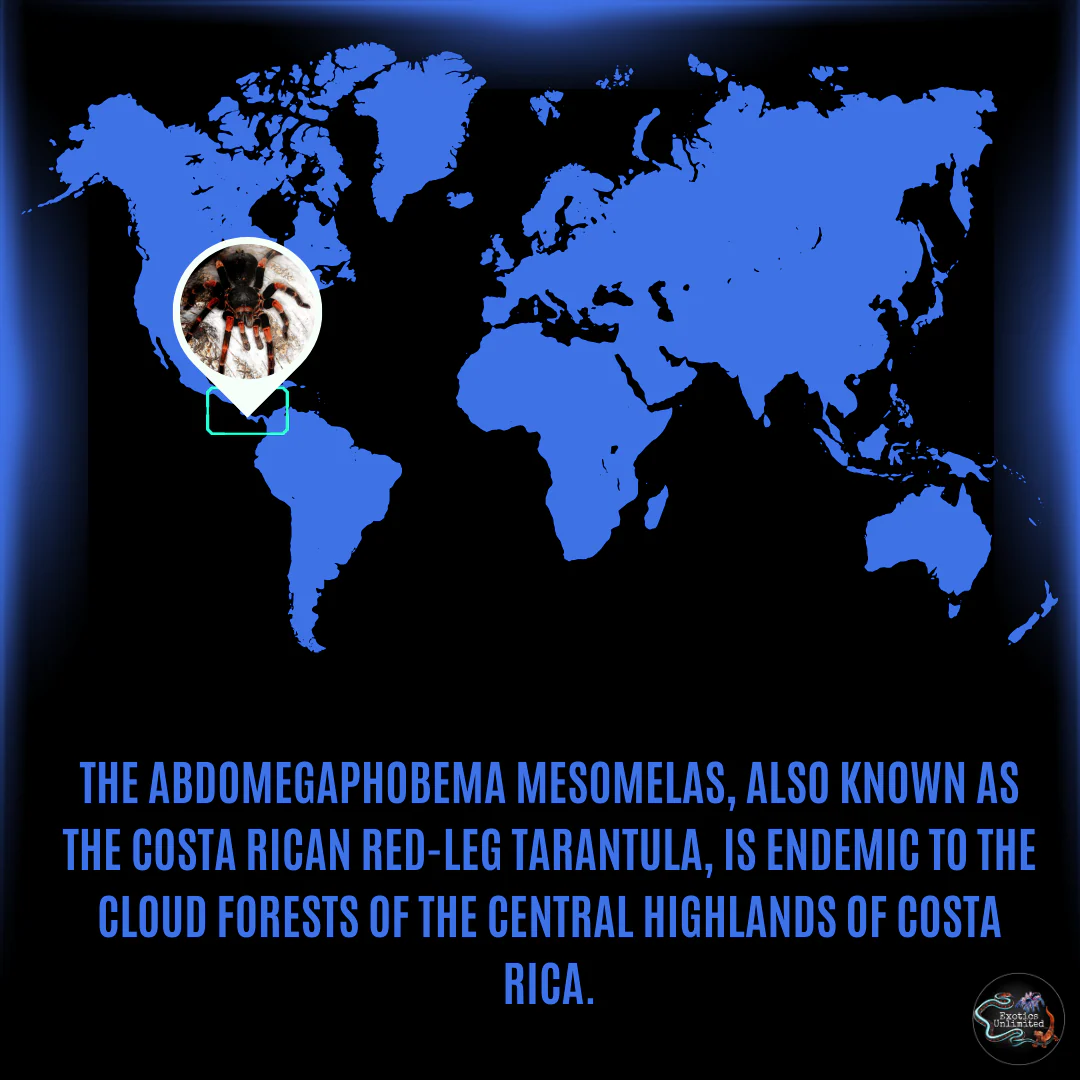
Abdomegaphobema mesomelas, commonly known as the Costa Rican Red Leg Tarantula, is a striking New World species from Costa Rica known for its bold, high-contrast coloration and generally docile temperament. As a spiderling, it begins with a more muted brown base color, lighter pinkish hairs, and distinctly pink feet that stand out against the rest of the legs. As it transitions into the juvenile stage, the legs begin developing stronger red to orange tones, gradually intensifying with each molt. By adulthood, this species develops a deep, velvety black coloration across the abdomen, legs, and carapace (head), contrasted by vivid red to orange banding along the legs. The intensity of the black body makes the orange striping stand out more sharply than in many similarly colored species, giving it a unique look that is not easily comparable. This is a stout terrestrial species that shows minimal webbing behavior and relies more on substrate and retreats, remaining fairly calm and deliberate in its movement.
Why Hobbyists Keep Abdomegaphobema mesomelas
- Color contrast: Develops into a deep black adult with bold red to orange leg banding that stands out more sharply than similar species
- Temperament: Generally docile and slow-moving, making it a manageable species compared to more reactive New World tarantulas
- Webbing behavior: Minimal webbing behavior, relying more on burrows and ground retreats than visible web structure
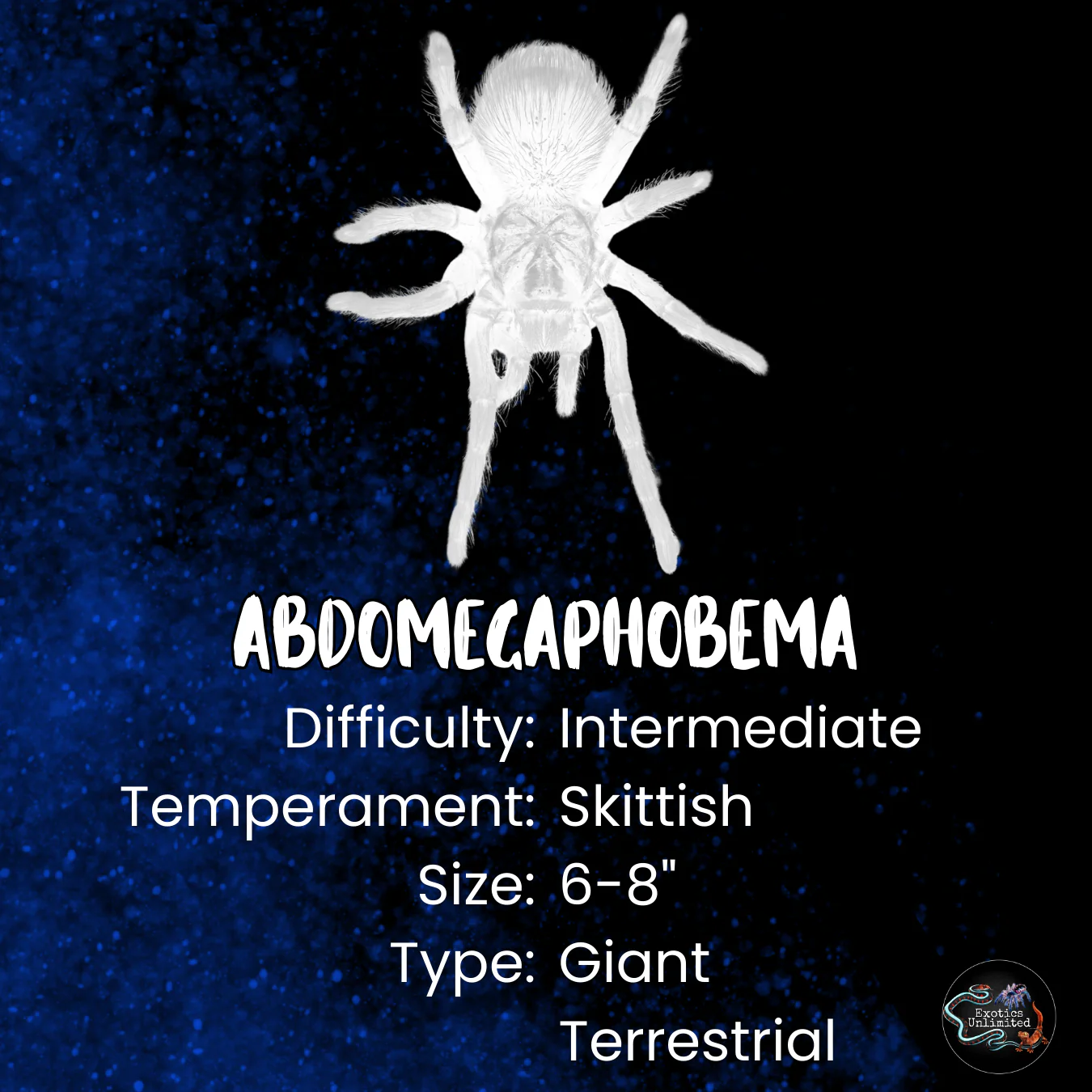
- Adult size and behavior: Reaches a maximum leg span of around 5 to 6 inches, with a stout build and steady, deliberate movement rather than constant activity
- Feeding response and activity level: Typically a consistent feeder with predictable habits, with most activity centered around feeding and occasional repositioning
Care Overview
- Enclosure: Provide a terrestrial setup with about 3× the leg span as floor space and 2× the leg span as height, with substrate depth around the spider’s leg span to allow for natural retreat use and light burrowing
- Temperature: Maintain between 65–75°F with stable conditions
- Humidity: Keep moderate humidity with slightly moist substrate, allowing the top layer to dry slightly while maintaining moisture deeper in the substrate
- Diet: Feed crickets, roaches, or similar prey sized appropriately to the carapace (head); juveniles and adults typically accept prey readily with a consistent feeding schedule
- Temperament: Generally docile, though may display defensive kicking behavior when disturbed
Additional Notes or Considerations
This species has become less commonly available in the hobby over time due to reduced captive breeding and fewer imports, making it more difficult to source compared to previous years. As a result, it is often sought after by collectors looking for a less commonly available species.
Because this species relies more on substrate and retreats rather than webbing, providing adequate depth and a secure hide will have a direct impact on how comfortable and visible it is within the enclosure.
Like others in this group, it may display defensive kicking behavior when disturbed. While generally calm, this is a normal behavior and something to be aware of during enclosure maintenance.
Original: $650.00
-65%$650.00
$227.50Product Information
Product Information
Shipping & Returns
Shipping & Returns
Description
Abdomegaphobema mesomelas (Costa Rican Red Leg Tarantula)
Abdomegaphobema mesomelas, commonly known as the Costa Rican Red Leg Tarantula, is a striking New World species from Costa Rica known for its bold, high-contrast coloration and generally docile temperament. As a spiderling, it begins with a more muted brown base color, lighter pinkish hairs, and distinctly pink feet that stand out against the rest of the legs. As it transitions into the juvenile stage, the legs begin developing stronger red to orange tones, gradually intensifying with each molt. By adulthood, this species develops a deep, velvety black coloration across the abdomen, legs, and carapace (head), contrasted by vivid red to orange banding along the legs. The intensity of the black body makes the orange striping stand out more sharply than in many similarly colored species, giving it a unique look that is not easily comparable. This is a stout terrestrial species that shows minimal webbing behavior and relies more on substrate and retreats, remaining fairly calm and deliberate in its movement.
Why Hobbyists Keep Abdomegaphobema mesomelas
- Color contrast: Develops into a deep black adult with bold red to orange leg banding that stands out more sharply than similar species
- Temperament: Generally docile and slow-moving, making it a manageable species compared to more reactive New World tarantulas
- Webbing behavior: Minimal webbing behavior, relying more on burrows and ground retreats than visible web structure
- Adult size and behavior: Reaches a maximum leg span of around 5 to 6 inches, with a stout build and steady, deliberate movement rather than constant activity
- Feeding response and activity level: Typically a consistent feeder with predictable habits, with most activity centered around feeding and occasional repositioning
Care Overview
- Enclosure: Provide a terrestrial setup with about 3× the leg span as floor space and 2× the leg span as height, with substrate depth around the spider’s leg span to allow for natural retreat use and light burrowing
- Temperature: Maintain between 65–75°F with stable conditions
- Humidity: Keep moderate humidity with slightly moist substrate, allowing the top layer to dry slightly while maintaining moisture deeper in the substrate
- Diet: Feed crickets, roaches, or similar prey sized appropriately to the carapace (head); juveniles and adults typically accept prey readily with a consistent feeding schedule
- Temperament: Generally docile, though may display defensive kicking behavior when disturbed
Additional Notes or Considerations
This species has become less commonly available in the hobby over time due to reduced captive breeding and fewer imports, making it more difficult to source compared to previous years. As a result, it is often sought after by collectors looking for a less commonly available species.
Because this species relies more on substrate and retreats rather than webbing, providing adequate depth and a secure hide will have a direct impact on how comfortable and visible it is within the enclosure.
Like others in this group, it may display defensive kicking behavior when disturbed. While generally calm, this is a normal behavior and something to be aware of during enclosure maintenance.