Davus sp. 'panama' (Lava Tarantula)
Davus sp. 'Panama' (Lave Tarantula)
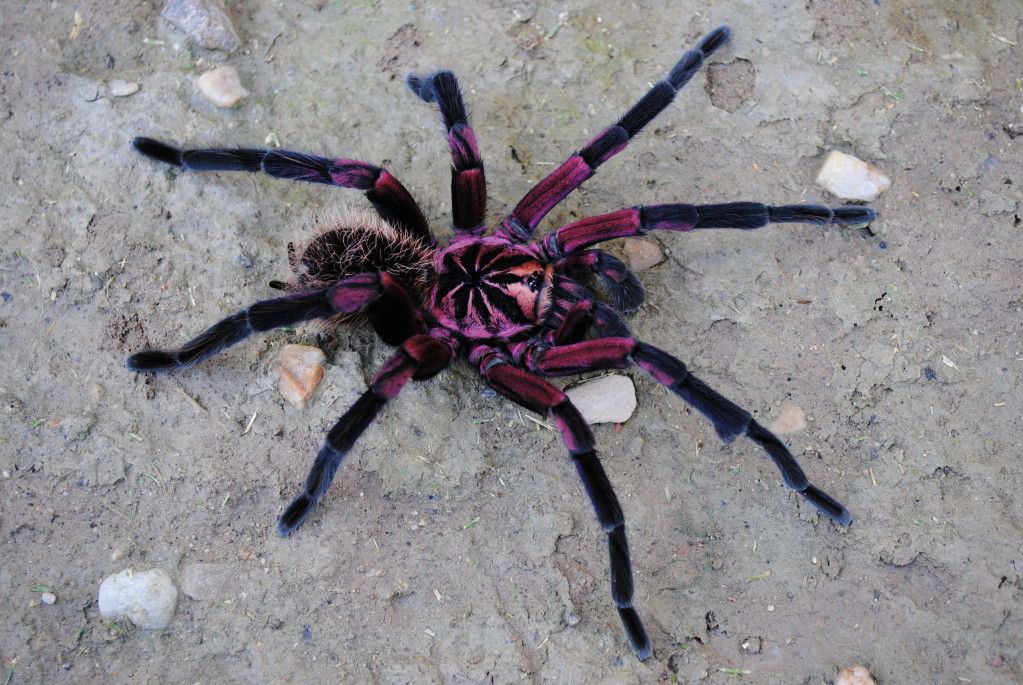
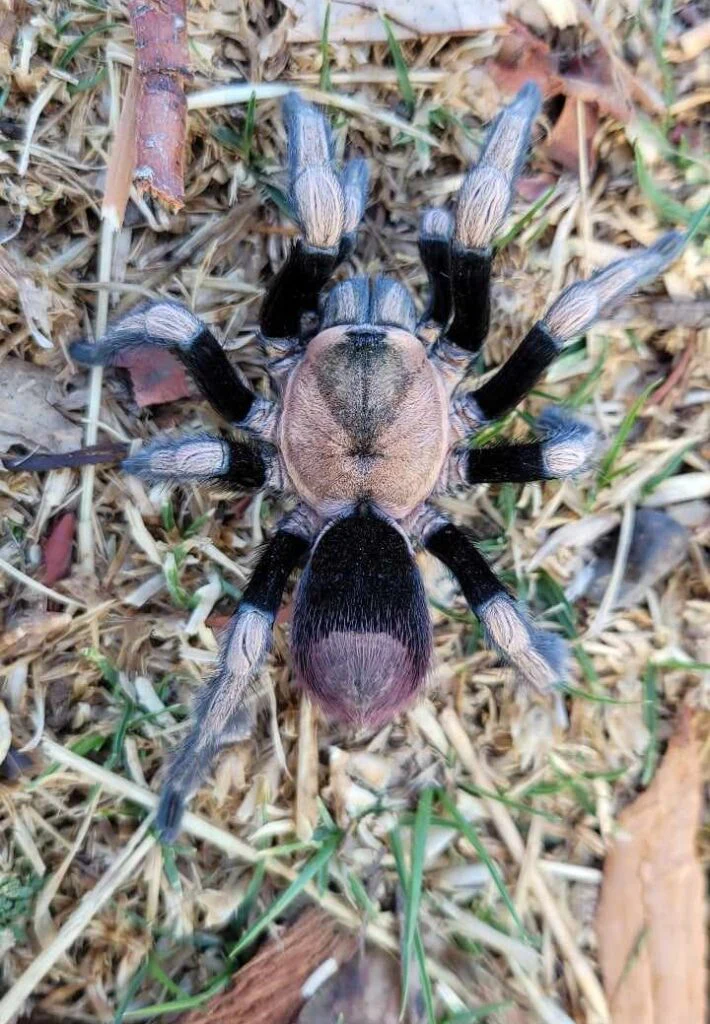
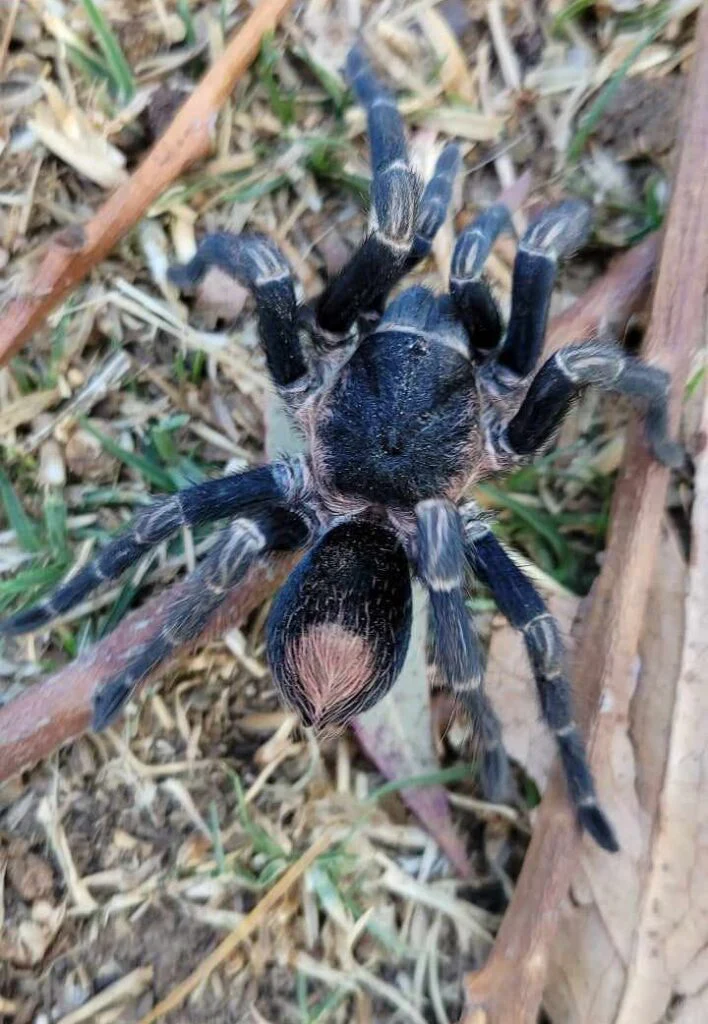
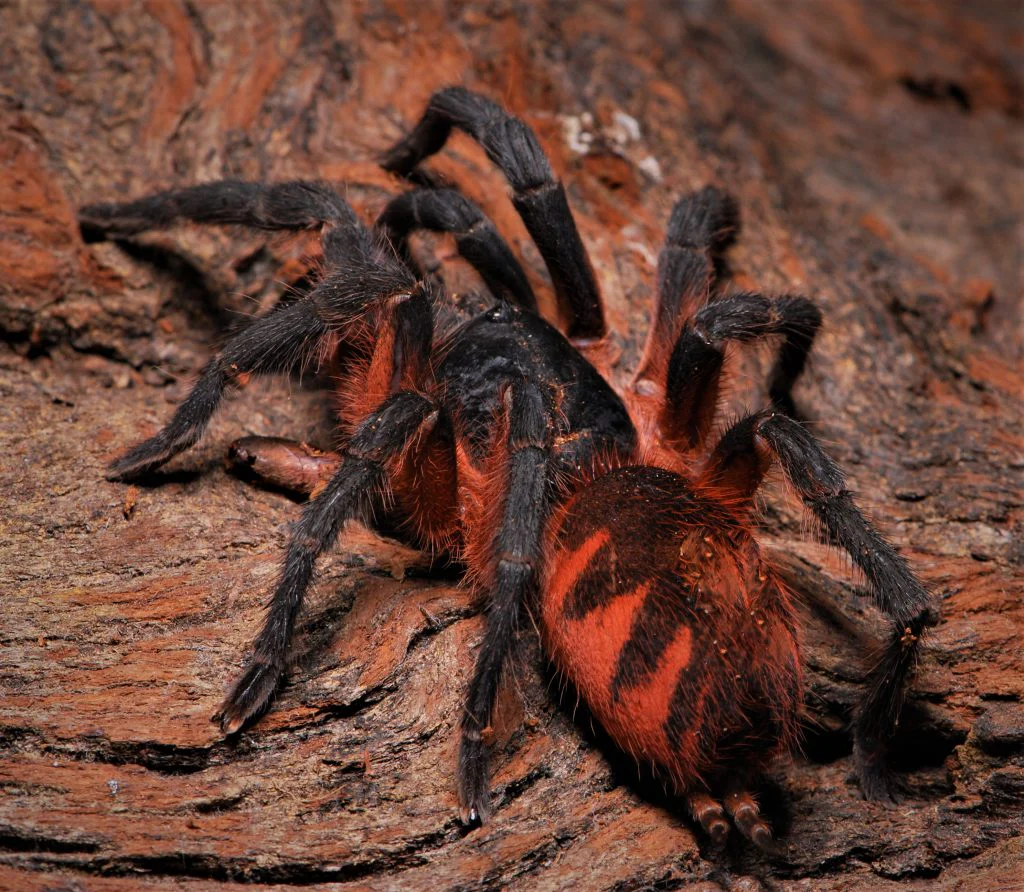
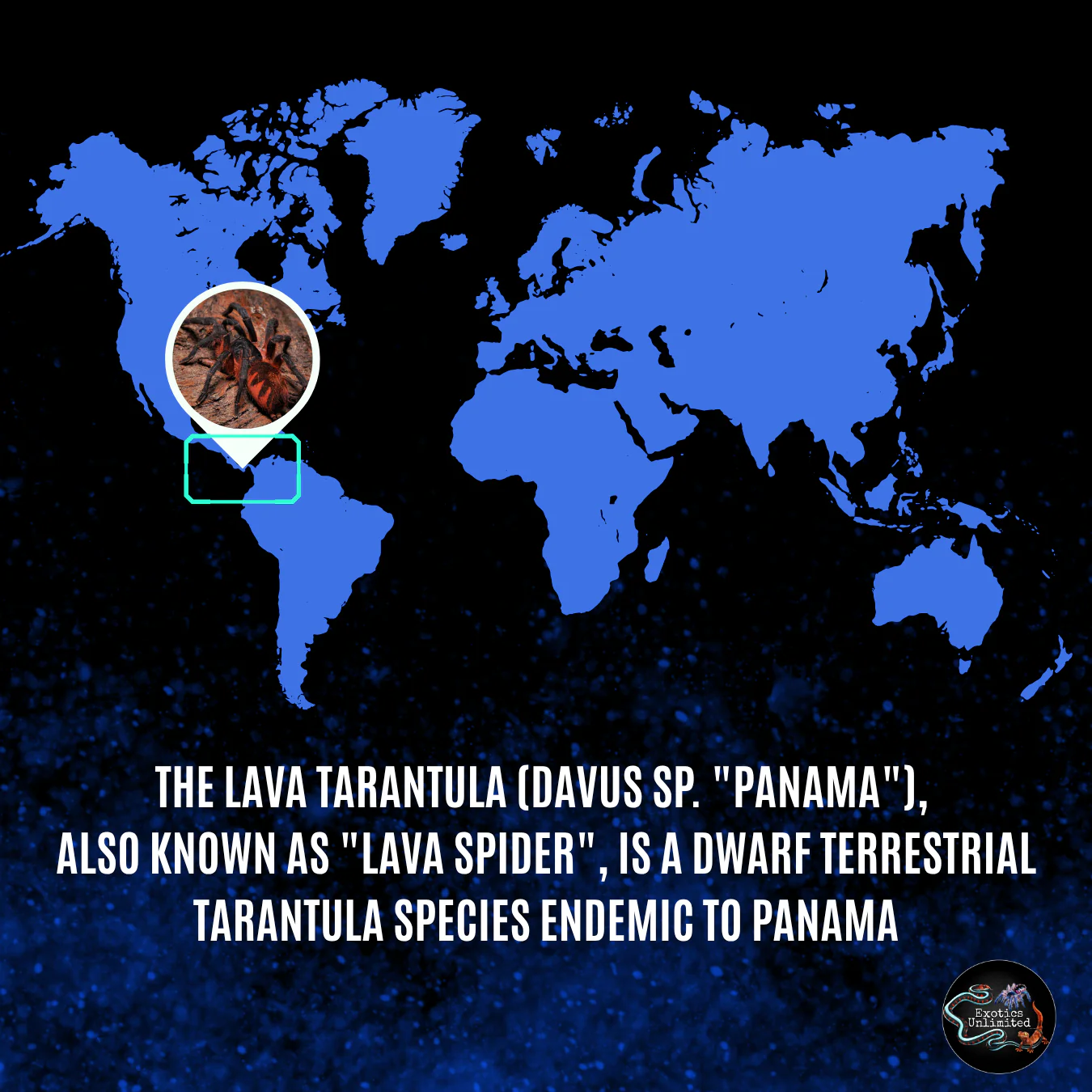
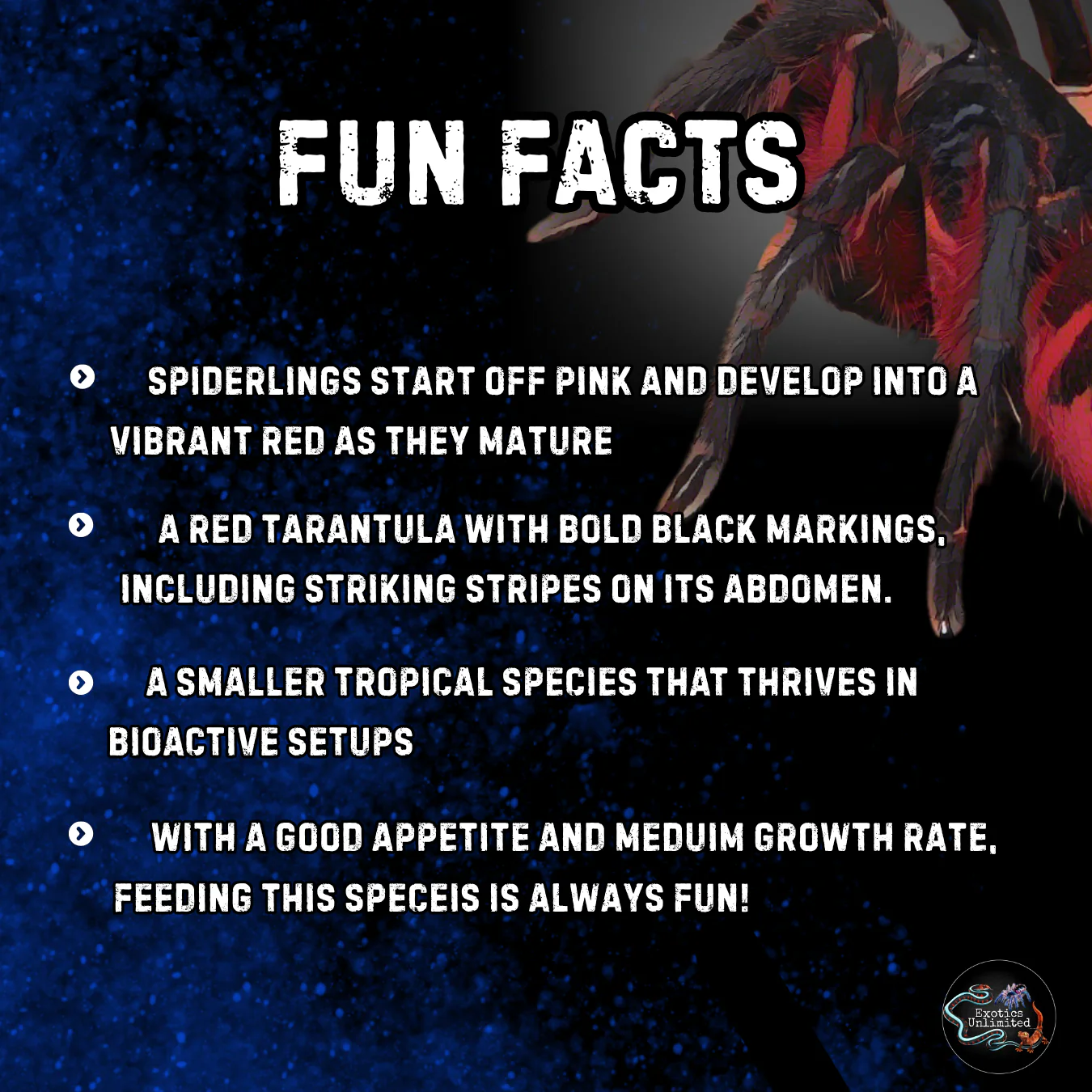
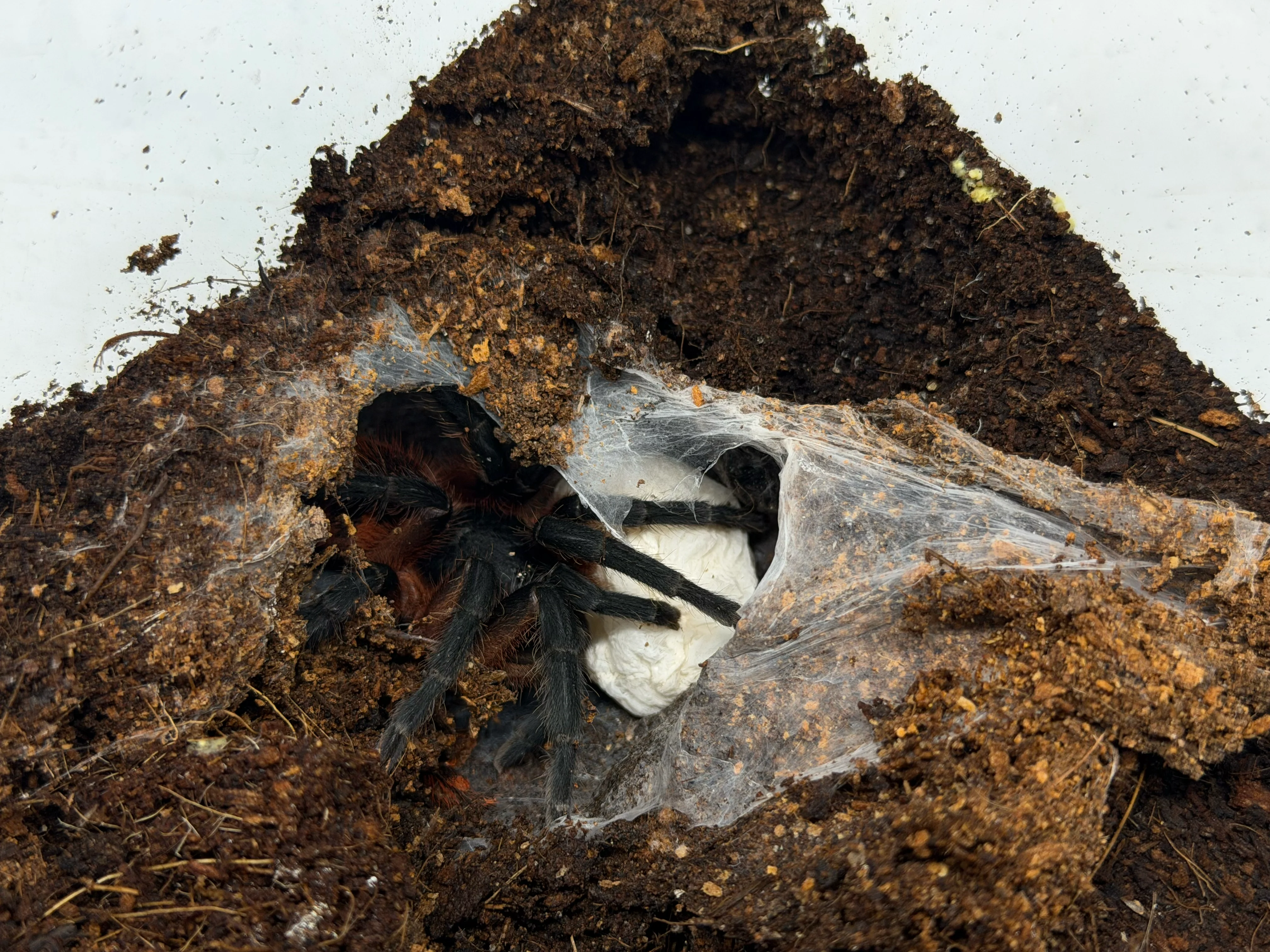
Davus sp. 'Panama', commonly called the Lava Tarantula, is a compact dwarf terrestrial from Panama with color that shows early and stays interesting through every stage of growth. As a spiderling, it already carries a clear pink and black version of the adult pattern, with pink legs and darker markings across the abdomen. In the juvenile stage, that pink brightens and begins shifting into a more vivid red, giving the species the glowing look that inspired the lava name. By the subadult stage, the contrast usually deepens further, and adults settle into a rich red abdomen with darker patterning set against darker legs and a darker carapace (head). It is a stout, ground-dwelling species with a strong webbing behavior, and it tends to stay visually active throughout its life rather than disappearing for long stretches unless conditions become too dry.
Why Hobbyists Keep Davus sp. 'Panama'
- Color: This species shows strong coloration as a spiderling, juvenile, and adult, with visible change at each stage rather than a dull early appearance.
- Life stage transition: The pink to red development is one of the main draws, especially in juveniles when the color can look especially bright and intense.
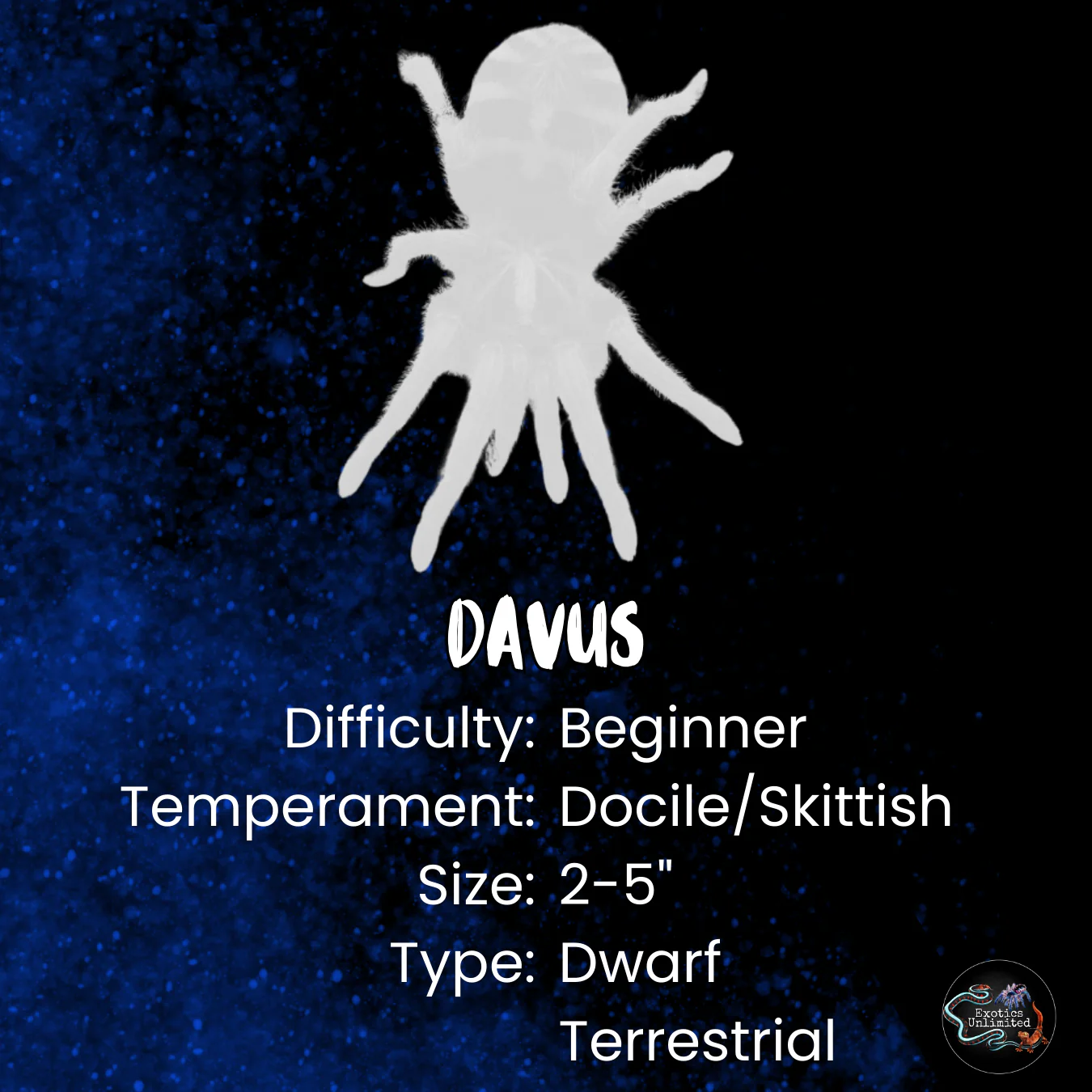
- Temperament: It is generally calm but not sluggish, and it usually chooses retreat over standing its ground when disturbed.
- Heavy webbing Webbing level: Webbing is typically heavy, often covering much of the enclosure and creating a very active-looking setup.
- Adult size and presence: This is a smaller, stout-bodied species, reaching 3.5", but it still has strong visual presence because of its color, behavior, and webbing habits.
- Feeding response and activity level: It usually has a solid feeding response and shows steady, noticeable growth when kept consistently.
Care Overview
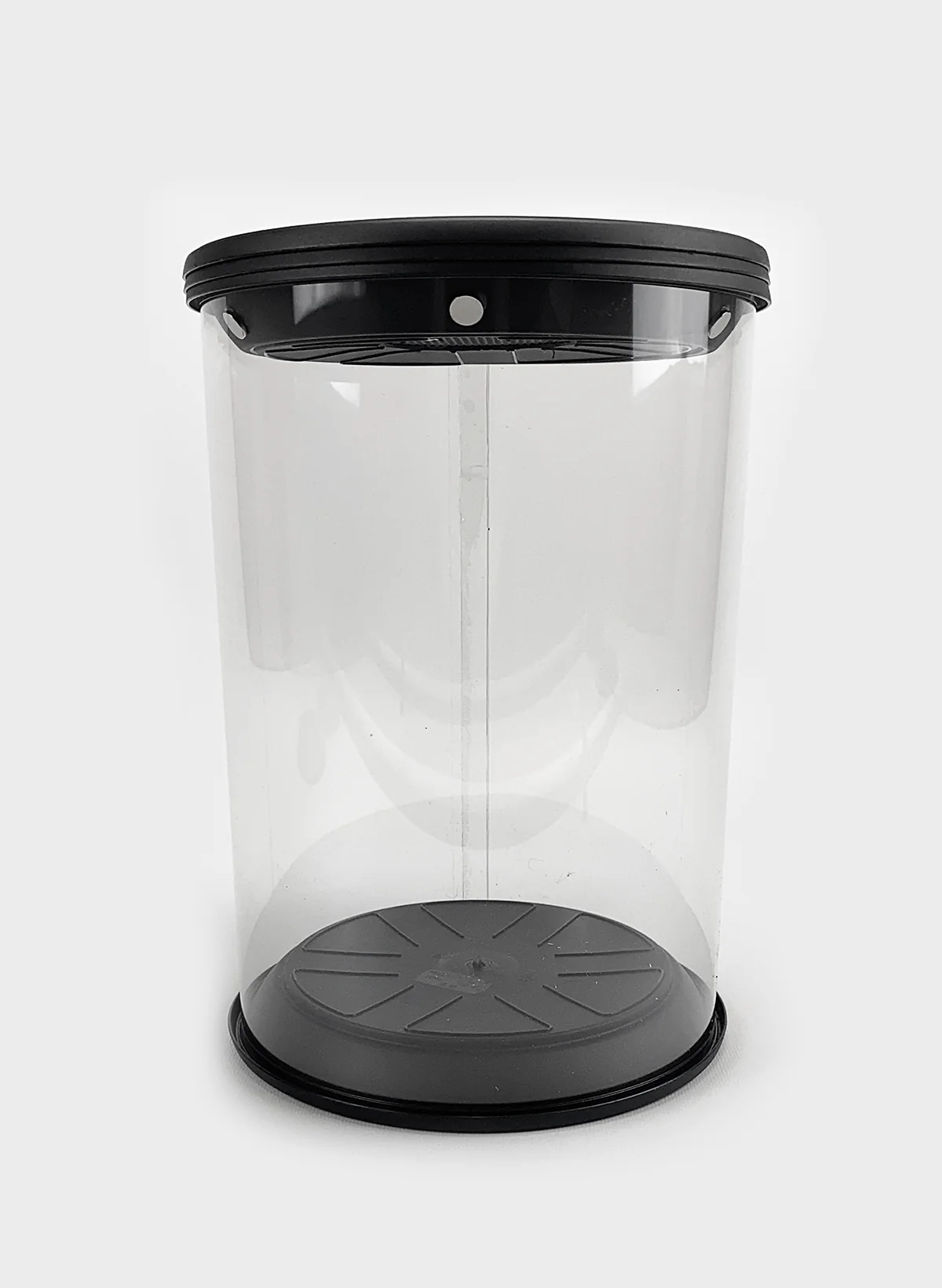
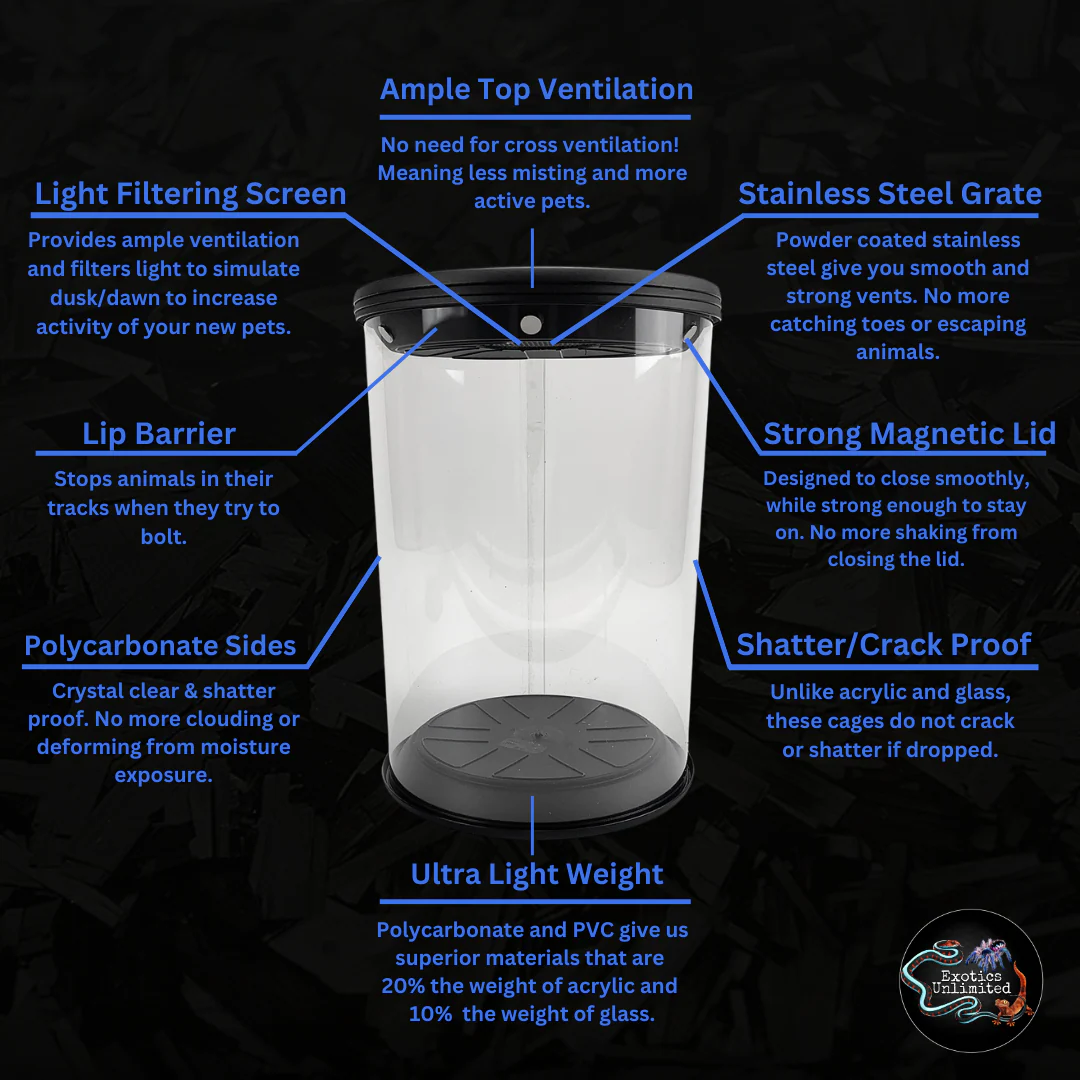
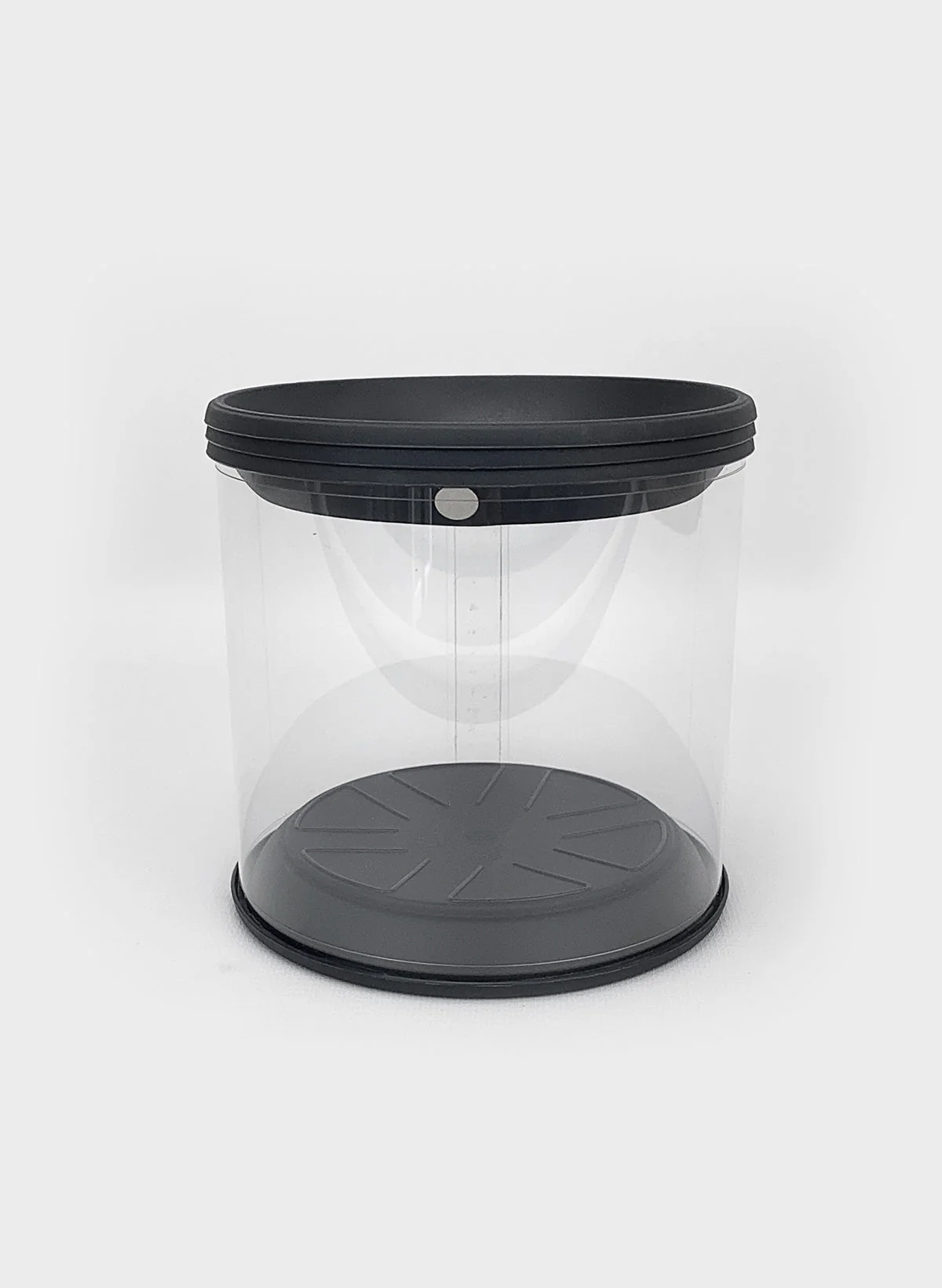
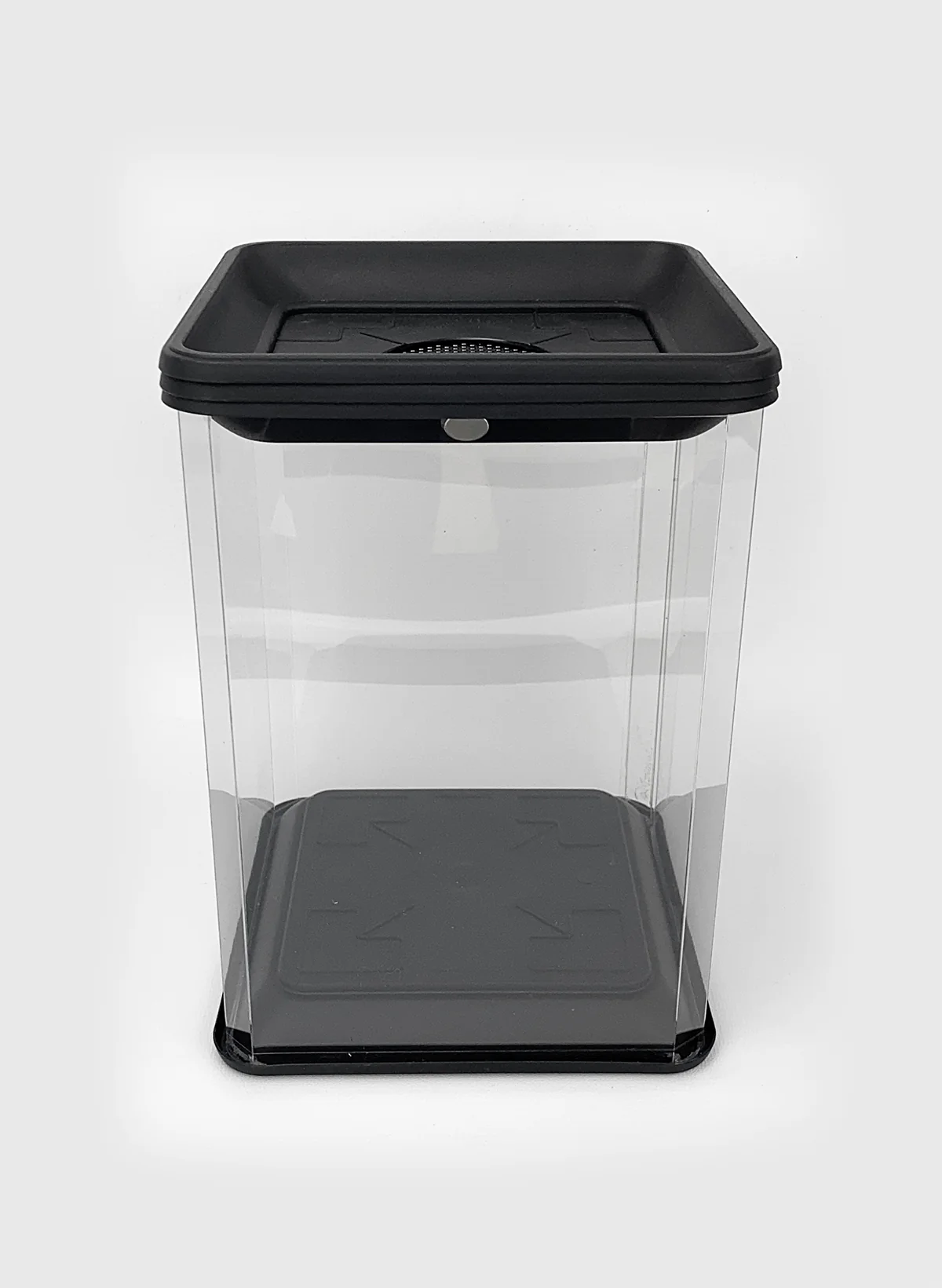
- Enclosure: Use a terrestrial enclosure with a floor space around 3 times the spider’s leg span and height around 2 times its leg span, with substrate depth close to the spider’s leg span so it can web heavily and make shallow burrows.
- Temperature: Keep this species between 65–75°F.
- Humidity: Maintain moderate to slightly higher humidity with good airflow, and keep the substrate slightly moist rather than letting it dry out fully.
- Diet: Offer crickets, roaches, and similar prey sized appropriately to the carapace (head), and feed regularly to support steady growth.
- Temperament: This species is generally calm, though it is quick to retreat into its webbing or burrow when disturbed.
Additional Notes or Considerations
This species is less forgiving of dry conditions than many arid terrestrial tarantulas. In practice, that matters because once the substrate dries too far, individuals often respond by burrowing deeper, sealing themselves in, and becoming less visible. Keeping the substrate slightly moist, without making it wet, helps preserve humidity, encourages regular webbing, and usually keeps the spider out in view more often. This matters most with spiderlings, which tend to be the most sensitive to inconsistent moisture levels.
Original: $125.00
-65%$125.00
$43.75Product Information
Product Information
Shipping & Returns
Shipping & Returns
Description
Davus sp. 'Panama' (Lave Tarantula)
Davus sp. 'Panama', commonly called the Lava Tarantula, is a compact dwarf terrestrial from Panama with color that shows early and stays interesting through every stage of growth. As a spiderling, it already carries a clear pink and black version of the adult pattern, with pink legs and darker markings across the abdomen. In the juvenile stage, that pink brightens and begins shifting into a more vivid red, giving the species the glowing look that inspired the lava name. By the subadult stage, the contrast usually deepens further, and adults settle into a rich red abdomen with darker patterning set against darker legs and a darker carapace (head). It is a stout, ground-dwelling species with a strong webbing behavior, and it tends to stay visually active throughout its life rather than disappearing for long stretches unless conditions become too dry.
Why Hobbyists Keep Davus sp. 'Panama'
- Color: This species shows strong coloration as a spiderling, juvenile, and adult, with visible change at each stage rather than a dull early appearance.
- Life stage transition: The pink to red development is one of the main draws, especially in juveniles when the color can look especially bright and intense.
- Temperament: It is generally calm but not sluggish, and it usually chooses retreat over standing its ground when disturbed.
- Heavy webbing Webbing level: Webbing is typically heavy, often covering much of the enclosure and creating a very active-looking setup.
- Adult size and presence: This is a smaller, stout-bodied species, reaching 3.5", but it still has strong visual presence because of its color, behavior, and webbing habits.
- Feeding response and activity level: It usually has a solid feeding response and shows steady, noticeable growth when kept consistently.
Care Overview
- Enclosure: Use a terrestrial enclosure with a floor space around 3 times the spider’s leg span and height around 2 times its leg span, with substrate depth close to the spider’s leg span so it can web heavily and make shallow burrows.
- Temperature: Keep this species between 65–75°F.
- Humidity: Maintain moderate to slightly higher humidity with good airflow, and keep the substrate slightly moist rather than letting it dry out fully.
- Diet: Offer crickets, roaches, and similar prey sized appropriately to the carapace (head), and feed regularly to support steady growth.
- Temperament: This species is generally calm, though it is quick to retreat into its webbing or burrow when disturbed.
Additional Notes or Considerations
This species is less forgiving of dry conditions than many arid terrestrial tarantulas. In practice, that matters because once the substrate dries too far, individuals often respond by burrowing deeper, sealing themselves in, and becoming less visible. Keeping the substrate slightly moist, without making it wet, helps preserve humidity, encourages regular webbing, and usually keeps the spider out in view more often. This matters most with spiderlings, which tend to be the most sensitive to inconsistent moisture levels.